
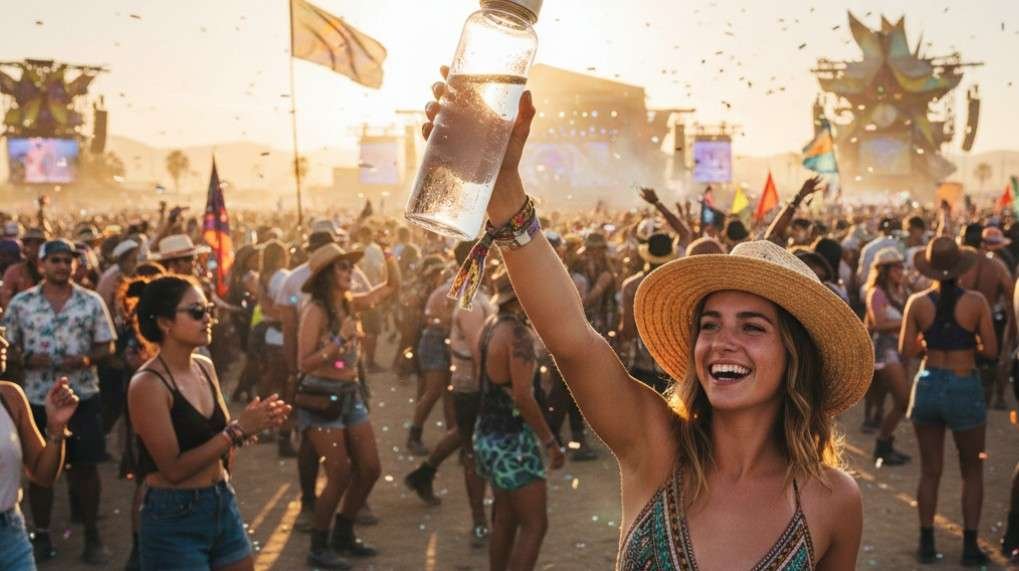
It was my first festival, and I had the best intentions. But by the afternoon, I was feeling sluggish, lightheaded, and had a pounding headache. My mistake? Not drinking enough water. I had no idea how crucial hydration would be to making it through the day, so I ended up spending the rest of the evening looking for shade and waiting in line for water.
Now, I know better. Hydration isn’t just about drinking water when you’re thirsty—it’s about preparing your body to handle the heat, the energy, and the long hours on your feet. If you want to avoid the rookie mistake I made, keep reading. This festival hydration guide will help you stay on top of your water game from prep to recovery.
1. The Pre-Festival Build-Up
Don’t start the festival weekend on empty. Your body needs time to adapt to an increased fluid intake, so start hydrating two days before the event.
The 48-Hour Rule: Begin increasing your water intake about 48 hours before the festival. This will give your body enough time to become accustomed to the extra fluids. Target 2.5 to 3 liters (85–100 oz) of water daily leading up to the festival.
Morning Ritual: On the day of the event, start your day by drinking 16–20 oz of water with breakfast. It’s a simple trick that tops off your tank before you head out into the heat.
2. Essential Gear & Tech
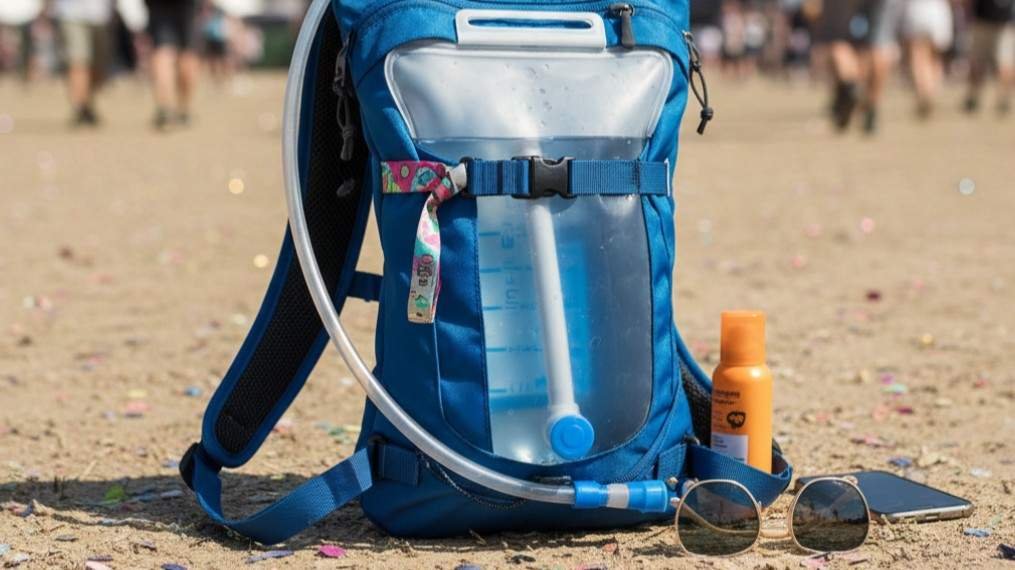
When it comes to following this festival hydration guide, the right gear can make all the difference. Whether you’re dancing at the front or hanging back at the chill zone, hydration packs and refillable bottles are your best friends.
Hydration Packs
If you want to stay hydrated hands-free while dancing, a hydration pack with a capacity of at least 1.5 liters is a must. This ensures you won’t have to waste time standing in line for water.
Refillable Bottles
For those who prefer traditional bottles, pack an empty insulated reusable bottle. Many festivals only allow empty or sealed containers, so make sure your bottle is empty when you arrive.
Electrolyte Packets
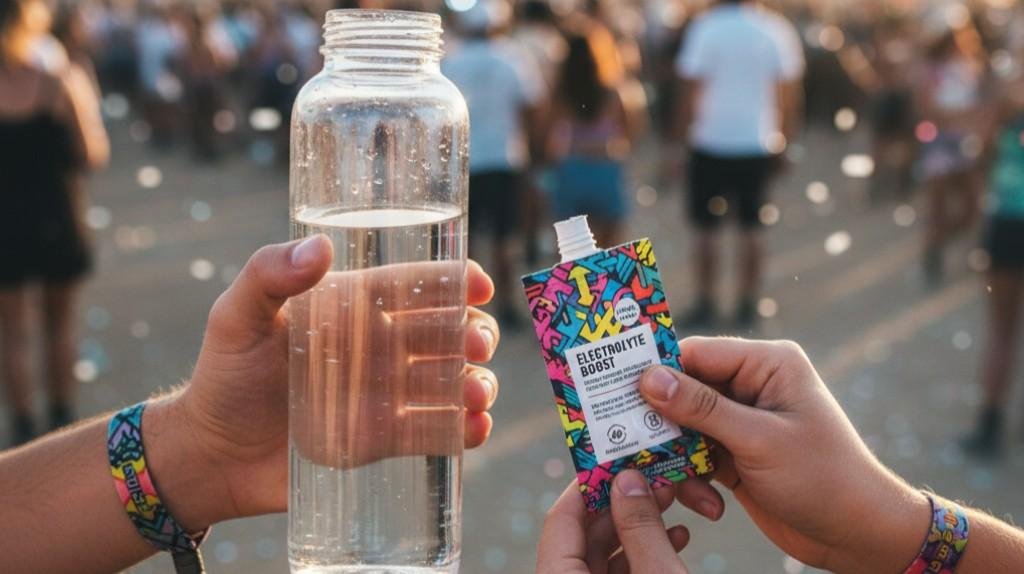
Dehydration isn’t just about water—it’s about replenishing those important electrolytes too. Pack electrolyte packets like Liquid I.V. or Nuun tablets to keep your body in balance. Pro tip: Don’t put these directly into your hydration bladder, as they can cause mold growth. Instead, store them in a pocket or dry pouch.
3. Strategic Sipping During the Show
It’s easy to forget to drink when you’re lost in the music, but staying on top of your hydration throughout the day is crucial. Here’s how to pace yourself and stay refreshed without feeling like you’re constantly drinking.
The Pace
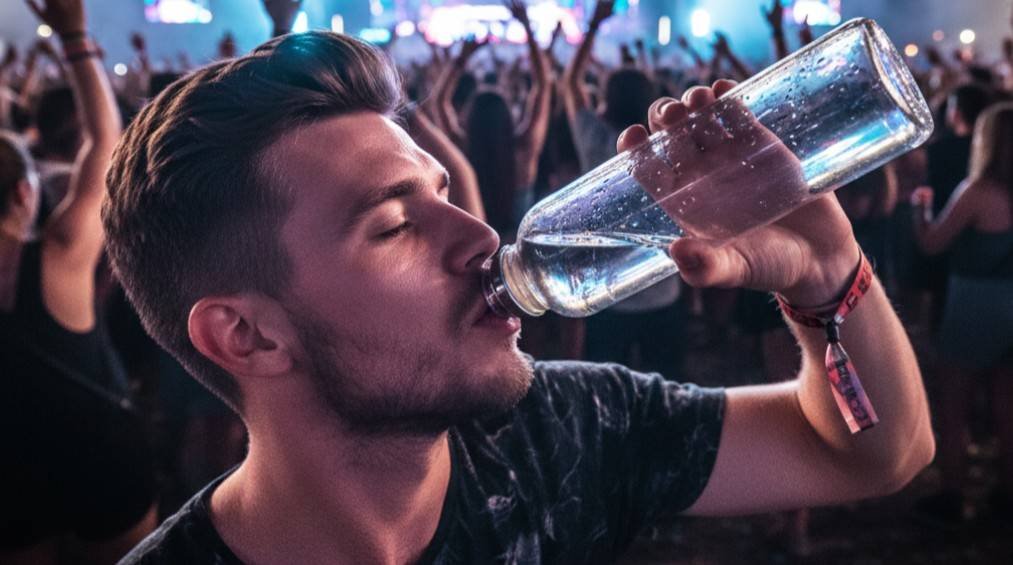
Drink small amounts of water throughout the day, aiming for about 13–27 oz per hour. It’s better to keep sipping consistently than to chug a bunch at once, which can leave you feeling bloated or overly full.
Visual Cues
Set a visual cue to remind you to drink. Whether it’s the lighting changing on stage, a friend tapping your shoulder, or a new track starting, use these moments to take a sip.
Beat the Crowds
Refill your bottle during less popular sets or “mellow jams” to avoid long lines at the water station. This will give you more time to enjoy the festival without worrying about hydration.
The Alcohol Ratio
For every alcoholic drink you have, make sure to drink at least 12 oz of water or an electrolyte solution. Alcohol dehydrates you, so balancing it with water will help keep your body in check.
4. Signs Your Body is Struggling
It’s important to listen to your body during the festival. If you’re not hydrating enough, it’ll send you warning signs. Here are the most common indicators that you need to take action.
Urine Color
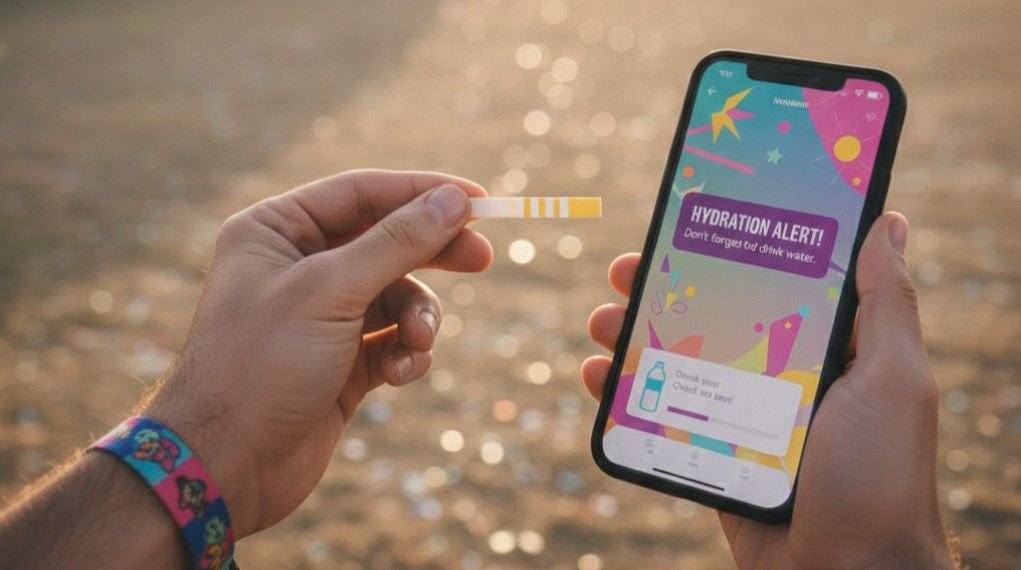
Keep an eye on your urine color—it’s a great indicator of hydration. Ideally, your urine should be pale yellow. If it’s dark yellow (like apple juice), you’re severely behind on hydration.
Physical Red Flags
If you’re feeling dry-mouthed, dizzy, or have cramping feet or calves, it’s time to hit the water station. If your skin feels hot to the touch and you’re starting to chill, you’re probably dehydrated.
The “Sweat Test”
If you stop sweating while in a hot crowd, seek medical help immediately. It could be a sign of heat exhaustion or dehydration, and it’s important to get help before things escalate.
5. Post-Show Recovery
Once the festival ends, don’t think your hydration job is over. Close your festival hydration guide with proper recovery is key to avoiding that dreaded “day-after” dehydration headache.
The 2-Hour Window
Within two hours after the show, try to consume 24–32 oz of fluids. This is your recovery window to replenish lost fluids before the effects of dehydration start to hit.
Hydrating Snacks
Don’t forget to hydrate with food! Eating water-rich snacks like watermelon, cucumbers, or oranges can help restore vital vitamins and minerals while keeping you hydrated.
Bedtime Prep
Drink 16 oz of water before you go to sleep. This can help prevent the dehydration headache that often hits the morning after a festival.
Frequently Asked Questions
Q1: How much water should I drink if I’m drinking alcohol at a festival?
For every alcoholic drink, it’s important to drink at least 12 oz of water. Alcohol dehydrates your body, so balancing it with water helps you avoid feeling sluggish or sick later. Make it a habit to sip water in between alcoholic beverages.
Q2: Can I drink too much water at a festival?
Yes, it’s possible to drink too much water, which can lead to water intoxication. This happens when the body’s sodium levels are diluted. Stick to the recommended amounts of water and balance it with electrolytes to stay safe.
Q3: Is coconut water a good option for hydration at festivals?
Yes! Coconut water is a great natural hydrator. It’s packed with potassium and electrolytes, which make it a fantastic option to restore your body’s balance, especially when combined with water.
Your Hydration, Your Festival Vibes
Here’s your festival hydration guide, as festivals doesn’t have to be a hassle. With a little preparation and the right hydration tools, you’ll be able to enjoy the music, the vibes, and the company without feeling sluggish or sick. Just remember: drink water consistently, balance it with electrolytes, and take breaks when your body needs them. You’ve got this!
And hey, here’s a personal tip: the best way to avoid dehydration is to never forget that water bottle—you’ll thank yourself later.